Published Aug 12, 2026
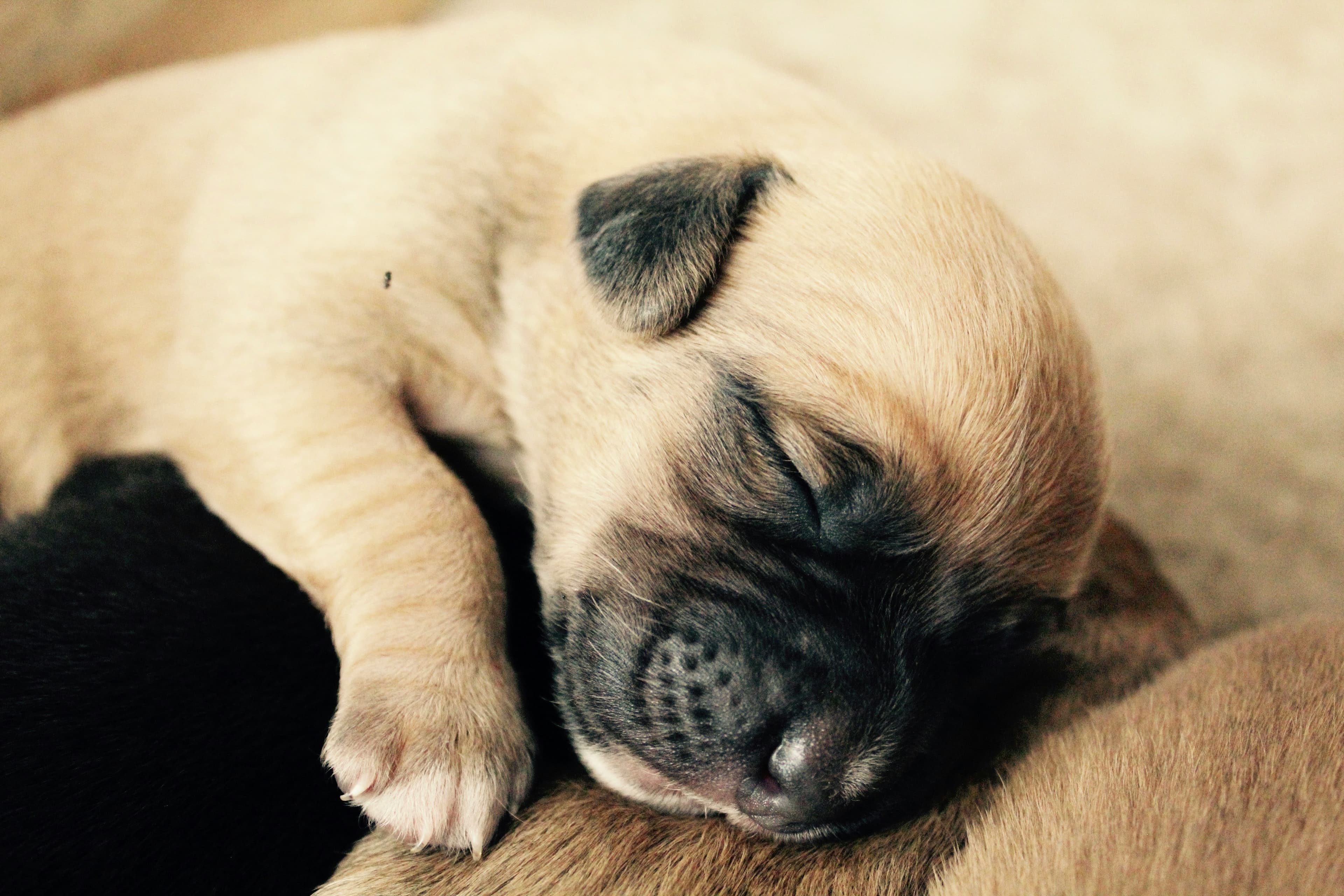
Here is the short version. The first two days set the pattern for the next few months, and almost none of that pattern is about training. It is about a puppy learning that the house is predictable, that food comes at the same times, that people are calm, and that the crate is not a punishment. Have one small space ready before you drive out to collect the puppy, expect crying on the first night and treat it as normal, and postpone every visitor you can. This article assumes you have already committed; if you are still deciding, are you ready for a puppy? covers that part.
Before the puppy comes home
Everything that makes day one go well happens before the puppy is in the building. Pick one manageable space and set it up completely — not the whole house, not the whole room, one confined area. A crate with the door left open, an exercise pen, or a baby-gated kitchen all work. The AAHA is explicit on this: the crate is taught by positive association only, so the door stays open, comfortable bedding and treats go inside, and you never lock the puppy in until they choose to rest there voluntarily.
Bulleted list:
Water, a bowl for the food the breeder or shelter was using, and a couple of chew toys the puppy can actually break down (soft rubber, not rawhide).
Bedding — a blanket or old towel is fine — placed inside the crate or a corner of the pen.
An enzymatic cleaner within reach. There will be accidents in the first 48 hours whether you are ready or not.
A designated potty spot outside, chosen before arrival. The same spot every time, from the first minute the puppy is home.
Then puppy-proof what the puppy can reach. Loose cables, small objects that can be swallowed, houseplants, and shoes are the usual suspects. The ASPCA's list of plants toxic to dogs is worth a minute against your own windowsill — sago palm and lilies of the valley are the ones to take seriously, and both come home in gift arrangements more often than people realise. Move human medications, chocolate, grapes, and anything containing xylitol out of range.
Two administrative jobs before pickup. Write the vet's number where you will find it at midnight, and book the first check-up now, for the first few days after arrival. The AAHA recommends locking in your support team — vet and trainer — before the puppy walks through the door, not after the first crisis. Buy a bag of the food the puppy is already eating; you can switch brands in a couple of weeks, gradually, but not in week one.
Hour 1 to 24: arrival and the first night
The car home is the first hard hour. Take a towel that has been in the puppy's environment already if you can, and drive with someone else so the puppy is not alone in a carrier in the boot. When you pull up at the house, do not go inside yet. Take the puppy to the potty spot you chose, put them down, and wait. If they go, praise quietly and go inside. If they do not, go inside anyway — they will let you know within the hour.
Once inside, take them straight to the prepared space, sit on the floor with them, and let them explore. No house tour. No greeting committee. If children are in the household, they sit on the floor at a distance, one at a time, and the puppy comes to them. The AAHA and AKC advice is consistent on this point: limit first-day introductions to family members only, do them one person at a time, keep everything calm, and do not invite friends and neighbours over yet.
Food and water go down on schedule from the first evening — for a young puppy that usually means three or four small meals a day. Some puppies eat immediately; some skip the first meal and eat at midnight. Skipping one meal on day one is normal. Skipping food for a full day is not.
Then there is the first night, and it deserves its own paragraph. The puppy will almost certainly cry. This is not the puppy manipulating you, and it is not a sign you have done something wrong. It is a puppy that has never slept away from its litter before, in a room that smells of nothing familiar, waiting for something to happen. Two approaches work and one does not. What works: crate or pen next to your bed, so the puppy hears you breathing and can be reassured without being lifted out. Also works: sleeping downstairs on a mattress on the floor for the first few nights, near the crate. What does not work: leaving the puppy alone in a distant room and waiting it out. That teaches the puppy that crying is pointless, but it also teaches them that being alone is frightening — a lesson that comes back later as separation anxiety. Emma Judson, quoted in the AAHA new-dog guide, is direct about this: the idea that early independence prevents attachment problems is backwards. The puppy is already entirely dependent on you; the job is to build trust, not test it.
Expect to be up two or three times in the night for a bathroom trip. This is not optional and it will not resolve itself. Set an alarm if you have to.
Hour 24 to 48: routine begins
By the second day the puppy is starting to trust the space. Progress looks like a puppy that sleeps for real stretches, eats without being coaxed, and follows you around the room rather than shadowing your feet in a panic. Do not confuse this with readiness for more stimulation. The house is still new; the puppy is still tired.
Two things become non-negotiable on day two: a fixed feeding schedule and a fixed bathroom schedule. Feed at the same times, in the same spot, from the same bowl. Take the puppy to the same potty spot every time, and take them often — after every meal, after every nap, after every play session, and every one to two hours in between. Every successful trip outside gets quiet praise. Accidents inside get cleaned up without comment; punishing an accident teaches the puppy to hide from you when they need to go, which is worse than the accident.
You cannot walk the puppy in public yet. Vaccinations are not complete, and the pavement outside your door is the highest-risk surface for a puppy in the country. But — and this is the point most new owners miss — you also cannot afford to keep the puppy at home for six weeks until the full course is done, because the socialisation window closes at around 12 to 14 weeks and does not open again. The AVSAB is unambiguous: the primary and most important time for puppy socialisation is the first three months of life, and the standard of care is for puppies to receive socialisation before they are fully vaccinated. What that looks like in the first 48 hours is small and safe: carrying the puppy to see a delivery van from the front step, sitting with them in the garden while the neighbours' children are audible next door, letting them watch you cook. Novelty in small doses, from a place of safety. Not the dog park. Not the pavement outside a busy road.
Other pets, children, visitors
The rule that saves whole weeks: the introduction that goes badly is harder to undo than one that never happened. Nothing is lost by waiting until day three or four for direct contact.
A resident dog. The confident-looking approach — walk both dogs in the garden together — is where most problems start. The safer sequence is scent first, sight second, contact third, across several days. Swap blankets between the two spaces on day one. On day two or three, allow visual contact through a baby gate with the resident dog on a lead. Watch the resident dog's body: a fixed stare, a stiff tail, or a raised hackle means the session is over for now.
A resident cat. Separate entirely for at least the first few days. The cat will decide when it wants to look; the puppy does not get to decide.
Children under six. Short, supervised sessions on the floor. No picking up, no chasing, no waking the puppy when it is asleep. The rule to teach children is the same one that works for cats: the puppy may come to you, and you may not go to the puppy.
Everyone else. No visitors for the first 48 hours. Not the neighbour, not the friend who has been waiting for photos, not the extended family. This is not rudeness; it is a deposit on the next twelve months of the puppy's temperament. The gate opens in week two.
What is normal, and when to call the vet
Most of what alarms new owners in the first two days is ordinary:
Crying at night, especially for the first two or three nights.
Skipping a meal on the first day.
Sleeping a great deal — puppies need 18 to 20 hours a day.
Loose stools for the first day or two from stress and food change, provided they are not bloody or continuous.
Occasional hiccups, sneezes, and yelping when they trip over their own legs.
What is worth a call, not a wait:
No food or water by the end of day one.
No bowel movement by 24 hours in, or no urine by 12 hours.
Vomiting or diarrhoea that repeats, or contains blood.
Breathing that is laboured or open-mouthed at rest.
Lethargy that does not lift after a nap — a puppy that will not engage with you at all after resting is not shy, it is unwell.
A cough that sounds like a goose honk (kennel cough).
Anything visibly wrong — swelling, discharge, obvious pain.
None of that is a diagnosis. It is a list of reasons to let someone qualified look at the puppy. The vet appointment you booked before pickup is not a formality; the AVSAB notes that behavioural problems, not infectious diseases, are the number one cause of death for dogs under three years of age, and the first check-up is where the vet, the trainer, and the socialisation plan get joined up. Book it. Keep it.
The first 48 hours, in order
Before pickup: one confined space set up, hazards cleared, food matched to what the puppy was already eating, enzymatic cleaner within reach, vet's number written down, first check-up booked.
Arrival: potty spot first, straight to the prepared space second, family met on the floor one at a time.
Day one: fixed feeding, bathroom trips after every meal and nap, no visitors, no house tour. Crate or pen next to your bed for the first night.
Day two: feeding schedule locked in, bathroom trips every one to two hours, small doses of novelty from a place of safety. Still no walks on public pavements, still no visitors.
In parallel: scent swaps with a resident dog from day one, no direct contact yet. Resident cat kept fully separate.
Within the first few days: the vet appointment, kept as booked.
The whole thing comes down to one discipline, and it is not a discipline that new owners come pre-installed with: doing less than the puppy makes you want to do. Every instinct you have on day one — to introduce the family, to walk them proudly around the neighbourhood, to see whether they like the kitchen or the sofa better, to answer every cry immediately by lifting them out of the crate — reads to the puppy as intensity. Intensity is the thing they already have too much of.
So do less, for two days. A puppy given a small space, a fixed schedule, and quiet company is calmer at the end of week one than a puppy who has met twenty people, been up on the sofa, and been to the pavement outside the corner shop. The training comes later, and comes more easily. The first 48 hours are for the puppy to work out that this house is a place where nothing frightening happens on purpose. That is the foundation. Everything else is built on top of it.
Tags
- adopting a dog
- dog adolescence
- dog ownership
- first-time dog owner
- puppies
- responsible pet ownership