Published Aug 18, 2026
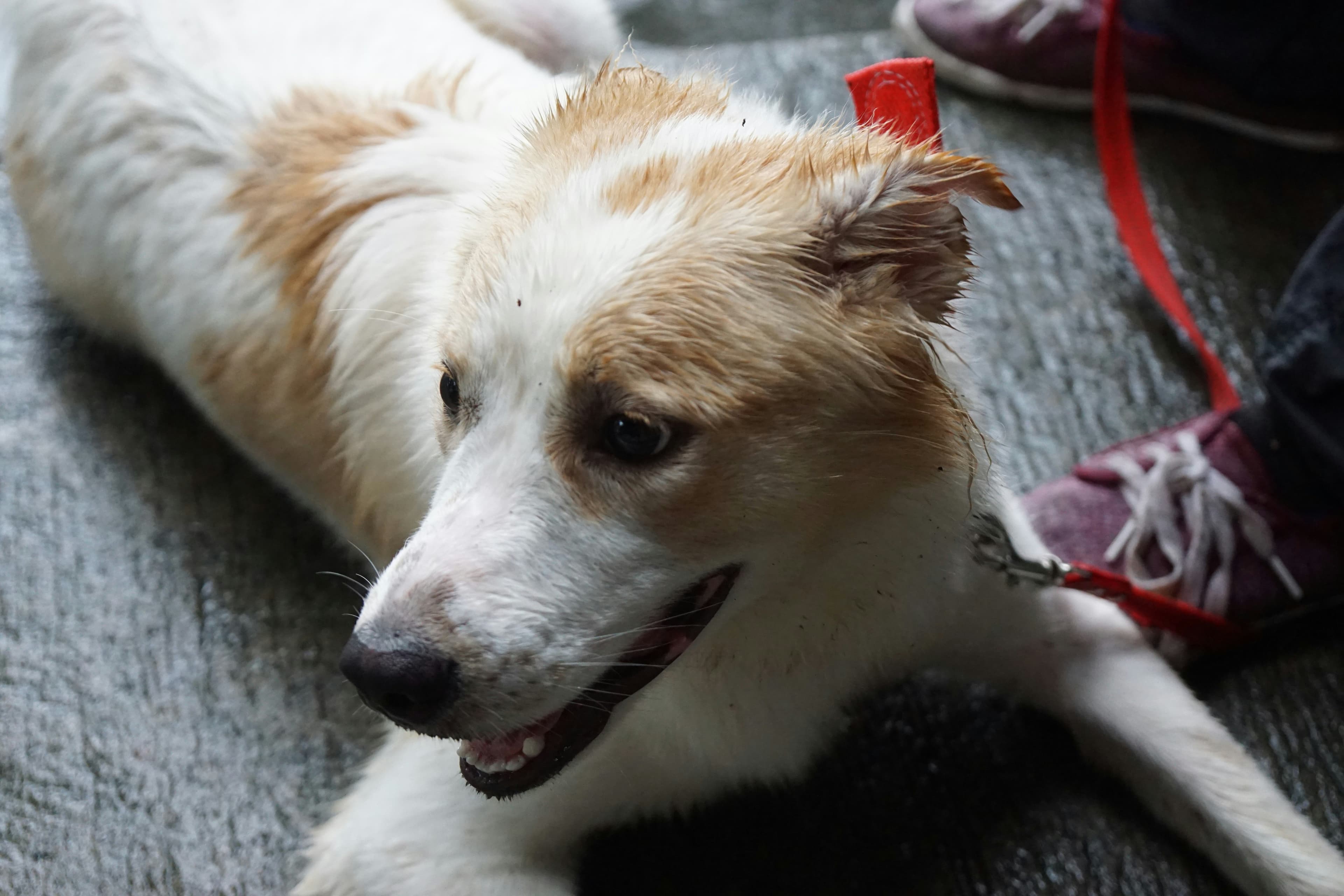
The car door closes. You drive away from the shelter with a dog in the backseat you don't yet know. She stares at the passing streetlights and doesn't blink. Somewhere between the parking lot and your kitchen, she becomes yours.
Then you get home and nothing happens for three days.
She won't eat. She hides behind the couch. She flinches when you speak too loudly. You start doubting yourself around hour thirty — is this dog broken, was this a mistake, why isn't she doing anything a dog is supposed to do. This is the point where new adopters call the shelter in tears, or worse, decide the dog is "not adjusting" and return her before she's had a chance to unfreeze.
She's fine. She's frozen. This is what week one of a rescue looks like, and the shelter probably mentioned "the 3-3-3 rule" as you were signing paperwork, right around the time you were too excited to hear it.
What 3-3-3 actually means
The ASPCA publishes it as a guideline: three days to decompress, three weeks to settle into a routine, three months to feel at home. That's the shape. The specifics are where new owners get blindsided.
Days one through three, the dog is in shock. She may not eat, drink much less than you expect, sleep for eighteen hours a day, or freeze at loud sounds. Or the opposite — she'll ping around the house cataloguing every surface, drinking three bowls of water, refusing to sleep. Both are the same nervous system doing the same thing in different ways. Nothing you do will speed this up.
Weeks one through three, the freeze thaws. The dog starts to test you. Where does she sleep at night? Who feeds her? Is that couch okay? She's building a map of the household — which humans are safe, which corners are hers, when food comes, when walks happen. Behaviors you didn't see in the first days start showing up: resource guarding, separation panic, a bark you didn't know she had, a preference for one family member over another.
Months one through three, she becomes the dog she actually is. This is where "she's such a different dog now" comes from. Not because she was pretending — because she couldn't be herself yet. If she was going to develop reactivity toward other dogs, you'll see it now. If she was going to bond deeply with your kid, this is when it starts happening.
Week one is the shock and the beginning of the thaw. Here's what to actually expect.
Day 1: the first 24 hours
The first three hours are the ones people over-plan. You want to introduce her to everyone, show her every room, offer treats. Don't. Take her from the car straight to the yard on a leash to pee. Then straight to one quiet room in the house — ideally not the loudest, not the room with the TV, not the kitchen where you cook. A bedroom or a home office works. Leave her leash on, dragging, so if she panics you can grab it without lunging at her collar.
Put down water. Put down a small amount of food — one-third of what the shelter fed her. Sit in the room with her but not close. Look at your phone, read a book, don't stare at her. If she comes to you, don't reach for her. Let her sniff and walk away. This is the single most powerful thing you'll do in the first day: prove that you're not going to grab.
She probably won't eat. That's fine. Dogs skip meals when stressed. Take the bowl up after twenty minutes and try again at the next mealtime.
Sleep the first night is unpredictable. Some dogs sleep hard from exhaustion. Some pace all night. Some cry. If she cries, don't rush in — sit outside the door for a minute first. If it stops, leave it. If it escalates, go in calmly, don't make a fuss, just sit near her again for a bit. You're teaching her that noise doesn't summon you or drive you away. It's information, not a request.
Skip the family group photo. Skip the walk around the block. Skip the introduction to the neighbor's dog. All of that is week two territory at the earliest.
Days 2 and 3: the deep freeze
This is when most first-time adopters start to worry. The dog isn't warming up. She's eating slightly more, but she's still sleeping most of the day, still flinching at doors, still not interested in play. You catch yourself Googling "rescue dog depressed" at 11 PM.
She isn't depressed. She's in a nervous system state that dogs enter when they don't have enough information about a new environment. Everything is unfamiliar — the smell of your house, the sound of your dishwasher, whether the person in the kitchen is safe, whether the food is going to keep coming. The correct response, biologically, is to move as little as possible until enough information arrives.
What she needs from you these two days is boring: same meal times, same walk times if you can walk her at all (short leashed loops around the yard count), same voice level, same people in the same rooms. If someone new comes over, don't introduce them — just let them exist in another room. If she wants to be near you, let her. If she wants to be alone, let her. You are not entertaining her. You are being predictable.
One thing that surprises people: don't shower her with treats. Your instinct is to shove high-value snacks at her all day so she associates you with good things. But a stressed dog often can't process food rewards, and constant treats train her to expect ongoing engagement she doesn't have the capacity for yet. A treat when she comes when you call her name once — that's plenty. Save the rest for later in the week.
Days 4 through 7: the first cracks show
Somewhere between day four and day seven, something shifts. She might trot down the hallway on her own for the first time. She might wag when you walk in. She might steal your sock and run.
This is not the moment to relax. This is the moment to pay attention. Because the behaviors that were suppressed by shock are the ones that start emerging now.
The most common surprise is barking. She was silent for three days and now she barks at the mail carrier, or the neighbor's door closing, or a bird outside. That's normal — she's got enough baseline now to react to things. Note when it happens but don't correct it yet. You're still gathering information about who she is.
Second surprise: resource guarding. She lets you near her bowl on day one because she was too shut down to care. On day five, she stiffens when you walk past. This can escalate quickly if you don't recognize it early. If you see stiffness or a hard stare over food or a toy, stop walking past. Feed her in a quiet corner where no one has to pass. This isn't forever — it's about not creating a conflict while she's still figuring out whether her stuff is safe.
Third: separation. If you were home for days one through three (which is ideal), day four or five is often the first time you leave for real. Some dogs handle this fine. Some fall apart. Watch for the aftermath — chewed things, accidents, scratches on the door. A camera during the first solo hour tells you more than any theory. If it's bad, don't leave her alone for long stretches yet. If it's fine, gradually extend.
Fourth, and this one catches people: she might get sillier. Not just playful — silly. Puppy-like even if she's an adult. Racing around the living room, mouthing your hand, doing zoomies. This is a good sign. It means she feels safe enough to be undignified. Let her have it. Just make sure she doesn't zoom into a coffee table.
Warning signs versus normal
Not everything is decompression. Some things need attention this week, not next month.
Normal: not eating for the first 24-48 hours, hiding, sleeping heavily, one accident indoors, no interest in toys, jumping at sounds, staying close to one person and ignoring others.
Not normal, worth calling the vet or shelter about: not drinking water for 24+ hours (dehydration is a real risk, especially in warm weather); vomiting or diarrhea beyond one incident (parasites and stress-related GI issues are common in shelter dogs); a limp or refusal to bear weight; sudden aggression that seems out of proportion — a snap over nothing, a bite that breaks skin. That last one is different from a growl or an air-snap, which are her telling you she's uncomfortable. Those are communication. A full contact bite in the first week means something you need help with, not necessarily a return to the shelter, but definitely a call to a trainer.
Also worth attention: extreme lethargy that lasts past day three, refusal to leave the crate at all, or eyes that never seem to focus on you. Shutdown of that depth sometimes indicates a dog who needs more time and quieter environment than you can offer, and it's better to know that early.
For more on this, see warning signs to watch for in the first weeks with a new pet.
What not to do this week
A rescue dog's first week isn't the week for:
Baths (unless she's actively filthy). She smells like the shelter and you want that out of your house, but a bath in the first three days is often the last straw. Wait until she's chosen you.
Introductions to other dogs. Not your friend's dog, not the neighbor's dog, not the dog park. Her stress tolerance is at zero. Even a friendly dog can trigger a reaction she wouldn't have next month.
Long walks. Ten-minute loops on a familiar route. That's it. New neighborhoods, hiking trails, busy sidewalks — all can wait.
House guests. If someone must come over, they don't interact with the dog. They exist in another room and pretend she isn't there.
Vet visits, unless medically necessary. Preventive stuff can wait a week or two. If she needs a vaccine or a follow-up, do it, but understand it will set her back a day or two.
Grooming. Nails, mats, ear cleaning — all wait. If she's got a serious mat causing skin issues, address only that spot. Otherwise, save it.
The first 48 hours guide for puppies covers some of the same ground for younger dogs, and much of it applies to adult rescues too, particularly on the environment setup.
The point of week one
You're not training her this week. You're not bonding with her, exactly. You're not fixing anything.
You're being reliably boring. Same time, same voice, same food, same room. That's the whole assignment. Everything you want — the affection, the walks, the play, the dog who curls up next to you on the couch — comes from her deciding you're safe, and that decision takes longer than seven days to make.
The end of week one is the beginning, not the halfway point. If she's eating on schedule, drinking normally, sleeping in the same spot each night, and looking at you when you say her name — that's a successful week. Anything else is a bonus.
Week two is when the real work starts. But that's another article.
For deeper background on what the source decision means after the dog is home, the rescue vs breeder trade-offs piece covers what actually differs in the years that follow.
Tags
- adopting a dog
- dog health
- dog ownership
- first-time dog owner
- new pet
- shelter dogs