Published Aug 19, 2026
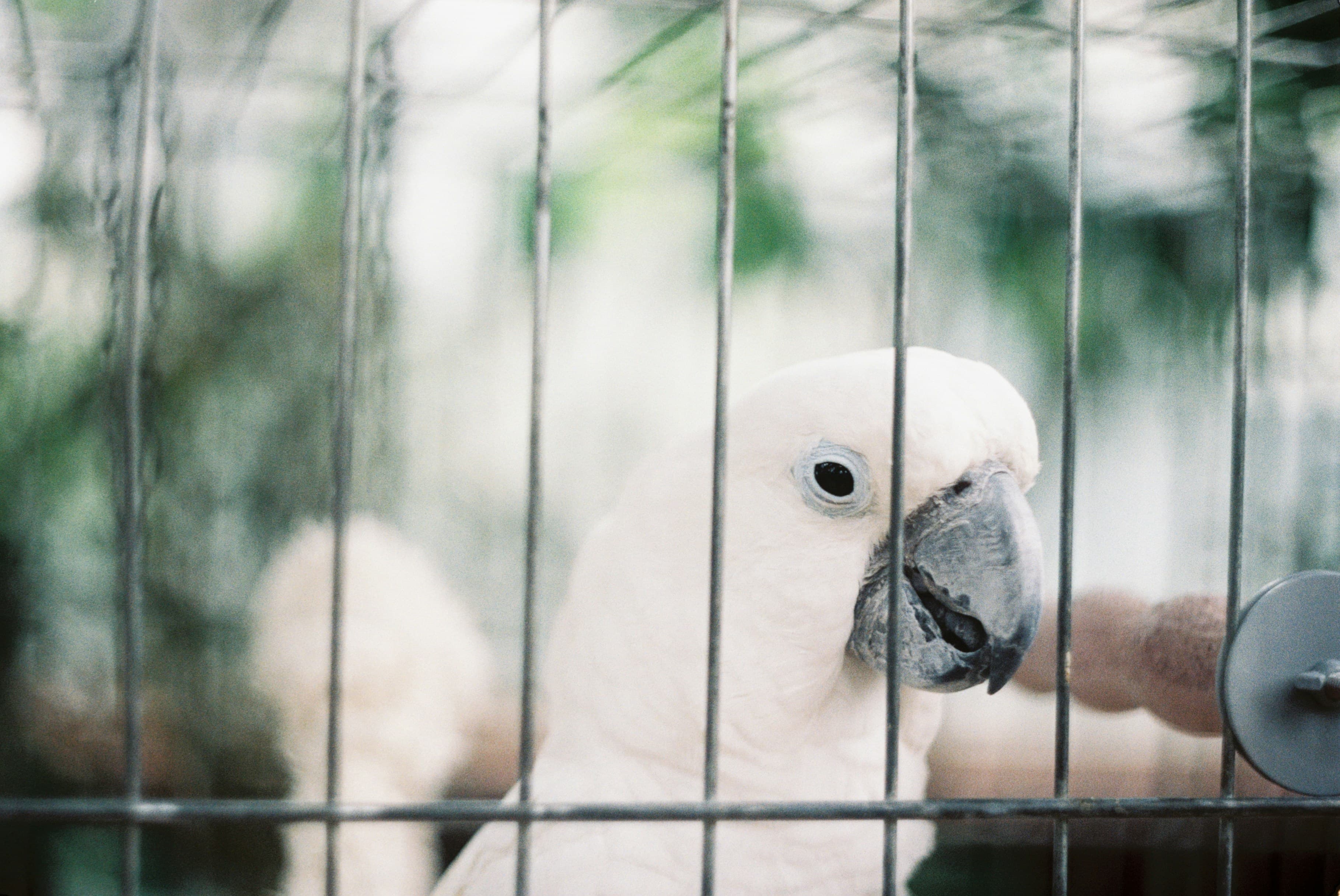
The pet store version of getting a bird sounds simple. You pick out a cage, they hand you the bird in a small cardboard box, you go home, put the bird in the cage, and start bonding. Maybe you get a bag of seed. Maybe someone tells you birds like millet.
Then you're home with an animal that spends the first three days screaming, refuses to eat what you bought, bites you the first time you try to touch it, and somehow flew directly into your ceiling fan on day four.
The problem isn't you and it isn't the bird. It's that new bird owners get bad information — often no information — about what actually goes wrong in the first weeks and months. The mistakes that damage trust with a bird, or worse, kill it, aren't the ones any first-time owner sees coming.
Here are the specific ones. Not a "top ten" list — the actual sequence of mistakes real people make, in roughly the order they make them.
Buying the cage that's too small
The single most common mistake, and it starts before the bird even comes home. The cage at the pet store labeled "for cockatiels" is often barely large enough for a cockatiel to open both wings. The cage marketed "for parakeets" is frequently sized like a hamster habitat.
Birds need horizontal space more than vertical. A tall narrow cage looks bigger and takes less floor space, but a bird flies horizontally, not vertically. The general rule for parakeets and cockatiels is minimum 30 inches wide and 18 inches deep, ideally larger. For conures and small parrots, larger still. For larger parrots like African greys or Amazons, cages start at 36 inches wide and go up considerably.
Bar spacing matters as much as size. Too wide and a small bird can get its head stuck. Too narrow and it wastes space. Parakeets need bars no wider than 1/2 inch. Cockatiels and small conures, 5/8 inch. Larger parrots, 3/4 to 1 inch.
The mistake compounds because most owners spend $100 on the wrong cage, then buy the right one three months later after realizing the bird is miserable. Buy once. Buy big.
Feeding an all-seed diet
The pet store hands you a bag of colored seed mix. The bird happily eats the sunflower seeds and picks around the millet, and you assume that's normal bird food.
It isn't. An all-seed diet is the equivalent of a child living on chips. Most captive birds fed exclusively seed develop nutritional deficiencies, fatty liver disease, and shorter lifespans. Wild birds don't eat seed mixes — they eat a huge variety of vegetation, insects, and only sometimes seeds.
A healthy captive bird diet is roughly 60-70% pellets (formulated for the species), 20-25% fresh vegetables and some fruit, and only 10-15% seeds and treats. Introducing pellets to a bird already hooked on seeds is a project — some birds refuse pellets for weeks and require patient gradual mixing.
Vegetables birds do well on include leafy greens (kale, romaine, dandelion), bell peppers, carrots, sweet potato, broccoli. Fruits sparingly — birds don't need much sugar. Avoid avocado (toxic), chocolate (toxic), caffeine, alcohol, onion, garlic, and anything from the nightshade family in raw form.
For the basics from a veterinary source rather than a pet store aisle, the Association of Avian Veterinarians publishes a general care overview for pet birds. A diet dialed in to your particular species is a conversation for your avian vet.
Underestimating how long trust takes
New bird owners tend to reach into the cage on day one, or day three, expecting to make friends. The bird panics. The owner backs off, feeling rejected. Both parties have now formed a bad memory.
Birds are prey animals. Their default assumption about a large, warm creature that looms over them is "predator." Trust is not the default. It has to be earned in specific ways, over specific timelines, and rushing it damages the bird's relationship with you often for months.
The first week, the goal is simple: sit near the cage without interacting. Read out loud, talk on the phone, do things that let the bird hear your voice at normal volume without being addressed. Don't reach in. Don't try to pet. Don't make eye contact for extended periods — direct eye contact reads as threat. Our guide to what week one with a new bird actually looks like walks through those days hour by hour.
Week two, you can start hand-feeding treats through the bars. Not from inside the cage — from outside, with the bird choosing to come to the bar and take it. This teaches the bird that your hand near the cage means good things without any grabbing.
Weeks three to eight, depending on the bird and species, you gradually build to putting a hand inside the cage without reaching for the bird. The bird approaches, or doesn't. If the bird flinches, you freeze or retreat. You are teaching the bird that you respect its signals.
Only after the bird routinely comes to your hand voluntarily do you introduce step-up training. This is a months-long project with some birds, weeks with others. Species matter — budgies often bond fast, cockatoos take longer, wild-caught birds (which shouldn't be sold anymore but sometimes are) may never fully trust.
Clipping wings without understanding what it does
Many pet stores clip wings by default and don't ask you first. Owners assume this is normal and don't think about it. It is not universally recommended anymore, and doing it wrong causes lifelong problems.
A properly clipped bird can still glide down safely. An improperly clipped bird — too many feathers cut, cut too short, cut asymmetrically — falls hard. Falls in young birds can cause chest injuries, keel bone fractures, or psychological trauma that never fully resolves. Some birds develop a fear of heights or of coming down that lasts their entire lives.
Wing clipping also has behavioral consequences beyond the obvious. Birds that can't fly don't get the same exercise or mental stimulation. Some develop obesity, feather-plucking, or anxiety issues that trace back to loss of flight.
The current consensus among avian vets is that wing clipping is a personal choice, not a default. If you clip, use an avian vet or experienced parrot handler — not the pet store. If you don't clip, invest in a safe, bird-proofed room and understand you'll have a flying bird in your home. Both are valid. What isn't valid is letting the pet store clip a bird into your care without you knowing what was done or why.
Ignoring air quality
This is the mistake that kills birds. Not immediately, sometimes, but reliably.
Birds have an efficient respiratory system that also happens to be extremely vulnerable to airborne toxins. What's mildly irritating to a human can be fatal to a bird within hours.
The famous case is Teflon. Non-stick cookware, when overheated, releases fumes that kill birds fast. Not "cookware in the same house" — "cookware you accidentally left on high heat for a few minutes." Owners have lost birds to a forgotten dry pan. Anything with a non-stick coating — pans, waffle irons, self-cleaning oven cycles, some space heaters, some hair dryers, ironing board covers — is a threat.
Other airborne hazards: cigarette smoke, incense, scented candles, air fresheners (especially plug-ins), essential oil diffusers, aerosol sprays, oven cleaner, bleach, ammonia, fresh paint fumes. Some cause acute death, some cause chronic respiratory disease. Cooking with high heat while birds are in the kitchen — even without Teflon — can push smoke and particulates into the air at levels that damage bird lungs.
If a bird is in your home, the whole home needs to be bird-safe. Not just the room the cage is in. Birds are exquisitely sensitive to what floats in the air, and their symptoms of poisoning are often not visible until it's too late.
For anyone in the first week with a new pet more generally, the environmental audit matters most in the first days when both animal and household are adjusting.
Not recognizing signs of illness until it's too late
Birds hide illness. It's an evolutionary strategy — a visibly sick bird in the wild is a target for predators. So a bird that shows obvious symptoms is often much sicker than it looks.
Subtle early signs to know:
Fluffed feathers when not sleeping or cold
Sitting on the cage floor
Tail bobbing with each breath
Wheezing, clicking, or open-mouth breathing
Discharge from nostrils or eyes
Reduced eating or drinking (weigh your bird weekly on a gram scale — weight loss is often the first sign)
Changes in droppings — color, consistency, or reduced quantity
Any of these means you consult an avian vet, and promptly. Not a general vet. Avian vets are a specialty, and they're not everywhere. The Association of Avian Veterinarians maintains a searchable directory — find one before you have an emergency. A regular dog-and-cat vet may not know how to safely handle or medicate a bird.
Buying a bird for a child
This one is less about care mistakes and more about setting up long-term failure. Birds are marketed as beginner pets. They aren't. Even a small budgie needs daily interaction, mental stimulation, veterinary care, and a decades-long commitment (budgies can live 10 years, cockatiels 20, larger parrots 40-70). If a parrot is what's being considered, the honest checklist on whether you're ready for one is the thing to read before the cage gets bought, not after.
Children under 12 rarely have the attention span or emotional maturity for the level of consistency birds require. They lose interest, get scared by biting, or find the mess and noise overwhelming. The bird ends up as the parent's responsibility by month three, unless the parent was already prepared to be the primary caretaker — in which case the child was a shaky justification for a decision the parent was going to make anyway.
Get a bird because you personally want one and are prepared for what it involves. Don't get one to teach a child responsibility, or as a birthday present, or because the pet store made it look easy.
The underlying mistake
All of the above trace to a single root: assuming a bird is easier to care for than it actually is because it's small, quiet at first, and lives in a cage.
Birds are among the most demanding companion animals available. They're loud when they choose to be. They require specialized diets, specialized vets, hours of interaction, careful environmental controls, and — depending on species — commitments of literal decades.
None of this is a reason not to get a bird. Birds bond deeply with humans who put in the work, live longer than most other pets, and are extraordinarily intelligent in ways that reveal themselves slowly. But going in prepared, rather than surprised, is the difference between an owner who succeeds and one who quietly returns the bird to the shelter three months in.
If you're still in the deciding phase, spend real time reading species-specific care guides before you buy — our rundown of which species actually suit a first-time owner is a reasonable starting point. Talk to owners of the species you're considering, not just the breeder or pet store. Visit an avian vet before you have a bird, if you can, and ask them what they see most often when new owners come in.
The bird will show up. It's the preparation before that decides how it goes.
Tags
- beginner birds
- bird ownership
- first-time bird owner
- new pet
- parrots
- pet birds